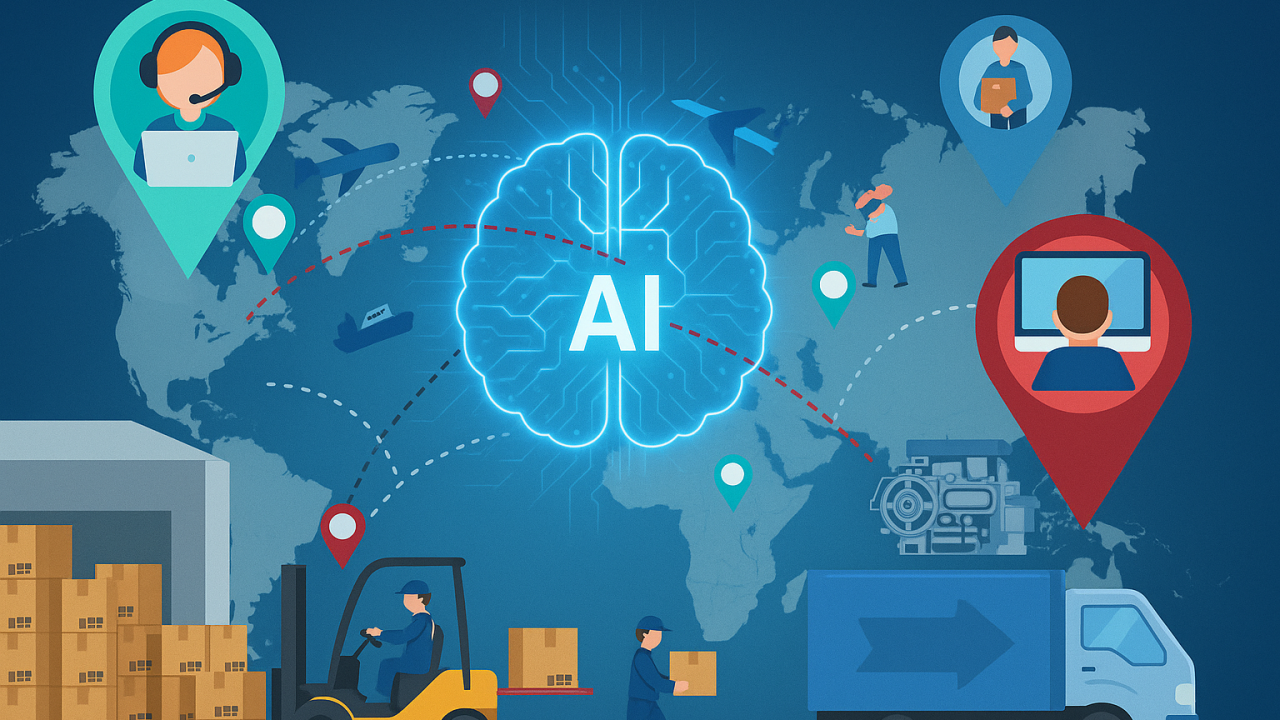

In the heart of India’s tech boom, Marathahalli in Bangalore has witnessed firsthand how artificial intelligence (AI) is redefining business landscapes. Among the most significant transformations is the disruption of traditional manufacturing supply chains. From real-time demand forecasting to predictive maintenance and smart logistics, AI is pushing the boundaries of what manufacturing operations can achieve. For professionals and students keen on understanding and thriving in this rapidly evolving sector, enrolling in an artificial intelligence course is vital for staying relevant and competitive.
The Legacy Supply Chain Model: A System Ripe for Disruption
Traditional manufacturing supply chains have long operated through static models that depend heavily on historical data, human intuition, and manual planning. These supply chains are often rigid, slow to adapt, and vulnerable to fluctuations in demand, global crises, and disruptions such as material shortages or transport delays. The COVID-19 pandemic exposed how fragile such systems could be, making the case for integrating adaptive, real-time intelligence into supply chain management.
Enter Artificial Intelligence: The Game-Changer
AI is not just a tool; it’s a transformative force that introduces autonomy, agility, and foresight into supply chains. Let’s explore how AI is disrupting every phase of the manufacturing supply chain:
1. Demand Forecasting and Inventory Optimisation
Forecasting has traditionally relied on past sales and seasonal trends. AI, however, leverages massive datasets—sales records, customer behaviour, weather patterns, social media sentiment, and even economic indicators—to predict demand with uncanny accuracy. Algorithms such as recurrent neural networks (RNNs) and support vector machines (SVMs) continuously learn and adapt, reducing the risks of overstocking or stockouts.
AI-driven inventory optimisation tools allow manufacturers to maintain optimal inventory levels, significantly cutting costs and enhancing customer satisfaction.
2. Supplier Selection and Risk Management
AI-powered platforms can evaluate and score suppliers based on reliability, financial stability, delivery performance, and compliance history. Natural Language Processing (NLP) tools can scan news, regulatory databases, and social media for potential risks to specific suppliers or regions.
This ensures manufacturers aren’t caught off guard by supplier failures or geopolitical tensions, allowing them to pivot swiftly when needed.
3. Production Scheduling and Predictive Maintenance
Production lines in traditional manufacturing setups are prone to inefficiencies due to unplanned downtimes or scheduling errors. AI changes this by optimising production schedules in real time based on current resource availability, order priority, and maintenance needs.
Moreover, predictive maintenance powered by AI sensors and machine learning models helps detect anomalies in machinery long before breakdowns occur. This minimises downtime, extends equipment life, and improves overall plant efficiency—something every engineer or plant manager should aim to understand through an artificial intelligence course.
4. Warehouse Automation and Robotics
AI-driven robotics have revolutionised warehouses by automating repetitive tasks like sorting, picking, and packing. Vision-based systems and collaborative robots (cobots) now work alongside humans, enhancing speed and accuracy while reducing injury rates.
Advanced AI software coordinates with warehouse management systems (WMS) to optimise layout and space utilisation, while drones and autonomous mobile robots (AMRs) ensure fast and efficient order fulfilment.
5. Smart Logistics and Transportation
AI’s impact on logistics is particularly evident in route optimisation and dynamic fleet management. Algorithms process live traffic data, fuel prices, weather forecasts, and delivery urgency to suggest the most efficient delivery routes. This helps companies lower transportation costs, reduce carbon emissions, and enhance delivery timelines.
Self-driving trucks, while still in development, are another promising frontier. These AI-powered vehicles could revolutionise long-haul transport by operating around the clock, accelerating shipping cycles.
6. Real-time Monitoring and Decision-Making
With the integration of Internet of Things (IoT) devices and AI, manufacturers now enjoy unprecedented visibility into their supply chains. From tracking raw material shipments to monitoring end-user delivery, real-time data feeds into AI dashboards, providing instant insights and recommendations.
This real-time responsiveness is crucial in an era where customer expectations are sky-high, and disruptions can arise anytime. Mid-level managers and operations analysts who pursue an AI course in Bangalore often find that understanding these AI applications gives them a strategic edge in their careers.
AI Adoption in Indian Manufacturing: Local Trends
In Marathahalli and other tech corridors of Bangalore, AI adoption in manufacturing is rising. Startups and MNCs invest heavily in AI technologies to modernise their supply chain frameworks. Local AI consulting firms are helping traditional factories shift to digital-first models by offering tools and training tailored to Indian market needs.
The Indian government’s “Make in India” initiative, paired with the Production Linked Incentive (PLI) scheme, is also nudging manufacturers toward greater digital adoption. With Bangalore as the epicentre of India’s tech talent, professionals equipped with AI skills are in high demand.
Challenges to Overcome
Despite the promise, AI deployment in manufacturing is not without its hurdles. Legacy infrastructure, high initial investment costs, data silos, and a lack of skilled personnel are some of the barriers. Many companies also grapple with integrating AI seamlessly into existing ERP and MRP systems.
That said, the long-term ROI of AI—via cost savings, process efficiencies, and competitive advantages—often outweighs these initial challenges. Upskilling the workforce through formal education and hands-on training is a key step forward.
The Road Ahead: A Future Driven by AI
The traditional manufacturing supply chain is transforming into an innovative, connected, data-driven ecosystem. AI enables manufacturers to be proactive rather than reactive, agile rather than rigid, and intelligent instead of intuitive. As global supply chains become increasingly complex, AI’s role will only deepen.
For students, professionals, and entrepreneurs in Marathahalli looking to capitalise on this trend, pursuing this course is not just an academic exercise—it’s a strategic investment. It equips them with the tools to understand and drive innovation in intelligent manufacturing systems.
Conclusion
Artificial intelligence is reshaping manufacturing supply chains from the ground up. The disruption is widespread and transformative, from predictive analytics and robotics to intelligent logistics and real-time monitoring. As Marathahalli continues to serve as a vital node in Bangalore’s innovation network, local talent has an extraordinary opportunity to lead this change.
Whether you’re an aspiring data scientist, a supply chain analyst, or a production manager, enrolling in an AI course in Bangalore ensures you’re equipped to thrive in this AI-led future. Manufacturing is no longer just about machines—it’s about smart decisions powered by intelligent data.
For more details visit us:
Name: ExcelR – Data Science, Generative AI, Artificial Intelligence Course in Bangalore
Address: Unit No. T-2 4th Floor, Raja Ikon Sy, No.89/1 Munnekolala, Village, Marathahalli – Sarjapur Outer Ring Rd, above Yes Bank, Marathahalli, Bengaluru, Karnataka 560037
Phone: 087929 28623
Email: enquiry@excelr.com